


This week, AnitaB.org cancelled the Grace Hopper Celebration (GHC). Just two weeks before thousands of women technologists were set to gather in Anaheim.
My first reaction, which I shared on LinkedIn, was sadness. I’ve been to GHC eight times: as an attendee, as a featured speaker, and while leading Intuit’s GHC strategy and presence during my time there. I know how much people pour into those few days, and how much it means to them.
Throughout the week, my sadness has evolved into a harder question.
AnitaB.org was candid about the reason for their cancellation. In its official statement, they explained that both individual registrations and corporate sponsorships fell well short of what was needed to cover the costs.
I imagine there are many factors behind those numbers, and I don’t pretend to know them all. But here’s the question that I’m left with:
As women remain underrepresented in tech, especially in leadership and AI roles, what happens when the investments designed to support their advancement begin to disappear?
And how do we distinguish between organizations changing how they support women versus quietly stepping away from the commitment altogether?
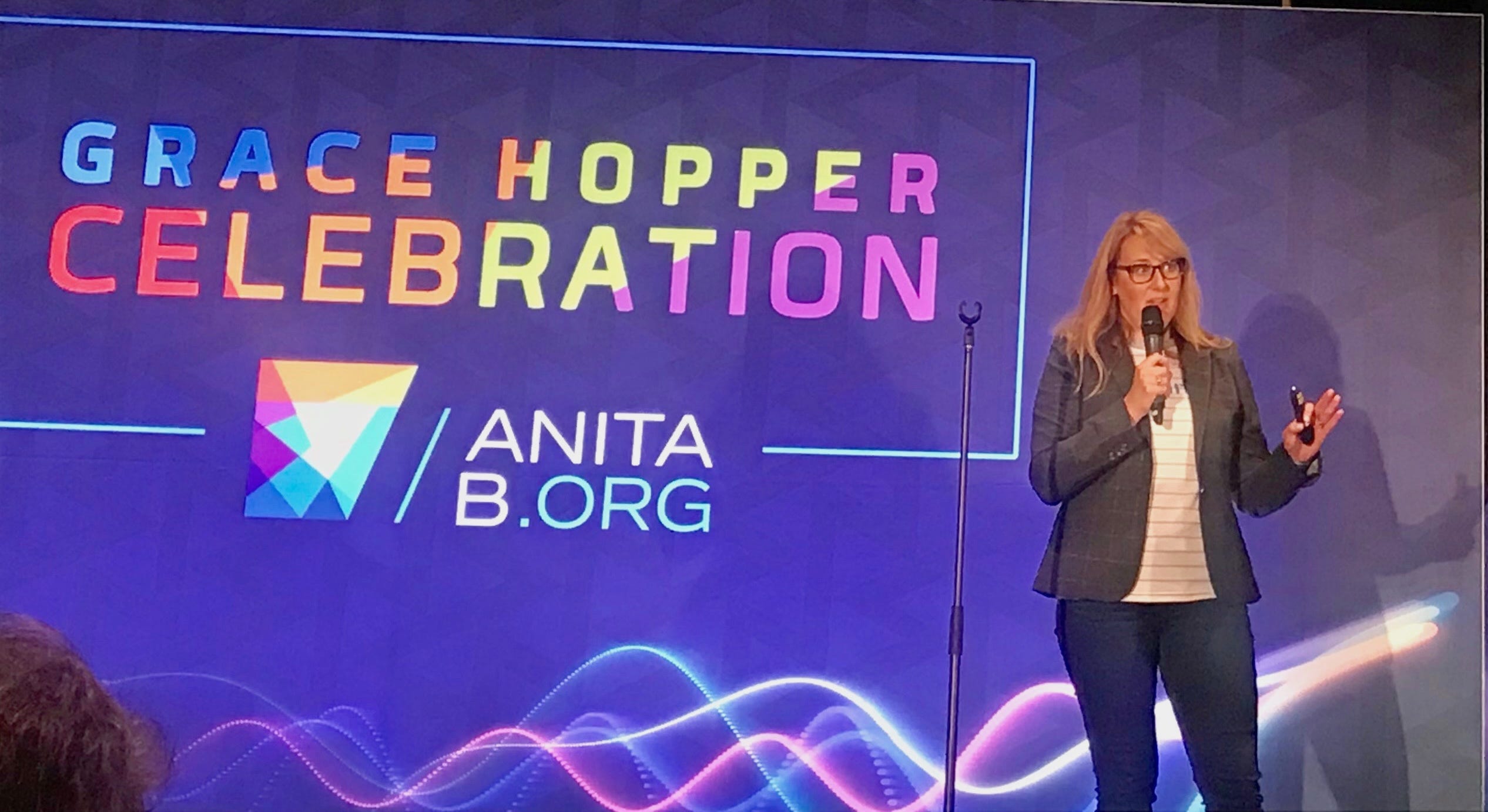
What GHC actually made possible
If you’ve never been, GHC can sound just like another large tech conference. It wasn’t. It was so much more than that.
There’s something extraordinary about being surrounded by thousands of women in tech. For once, you’re not the only woman in the room. You’re part of the majority.
But beyond that experience of belonging, GHC created impactful career opportunities, strengthened professional networks, and influenced how organizations approached women in tech. I saw that firsthand while leading Intuit’s GHC strategy.
One of my favorite memories is from an employee dinner we hosting during GHC. We brought together all of our attendees from the different business units, locations, roles and leadership levels. One year, something happened we hadn’t planned. The executives who were there began sharing their personal reasons for supporting women in tech. One by one, they passed the microphone, each offering their perspective. I still remember the feeling in the room: the connection, the recognition, and the shared commitment.
I also remember meeting a candidate at our booth who was excited about applying for a role. She impressed me, and I helped connect her with our recruiting team and the hiring manager. She interviewed, and ultimately got the job. When we connected again after she started, she remembered that first conversation and how much it meant to her.
That’s what opportunity looks like beyond a metric shared on a slide. There’s a real person, with a real career, on the other side of it.
Other powerful moments came from conversations with our senior executives at the end of the conference. For some, it was their first experience being one of the few men in a room filled with thousands of women in tech. Some talked about how the experience challenged their assumptions about how difficult it was to find qualified women candidates. In the sea of GHC attendees, they experienced the extraordinary depth and breadth of talent available.
And they left asking how they could do more.
Those outcomes didn’t happen by accident. They happened because organizations chose to invest in creating them.
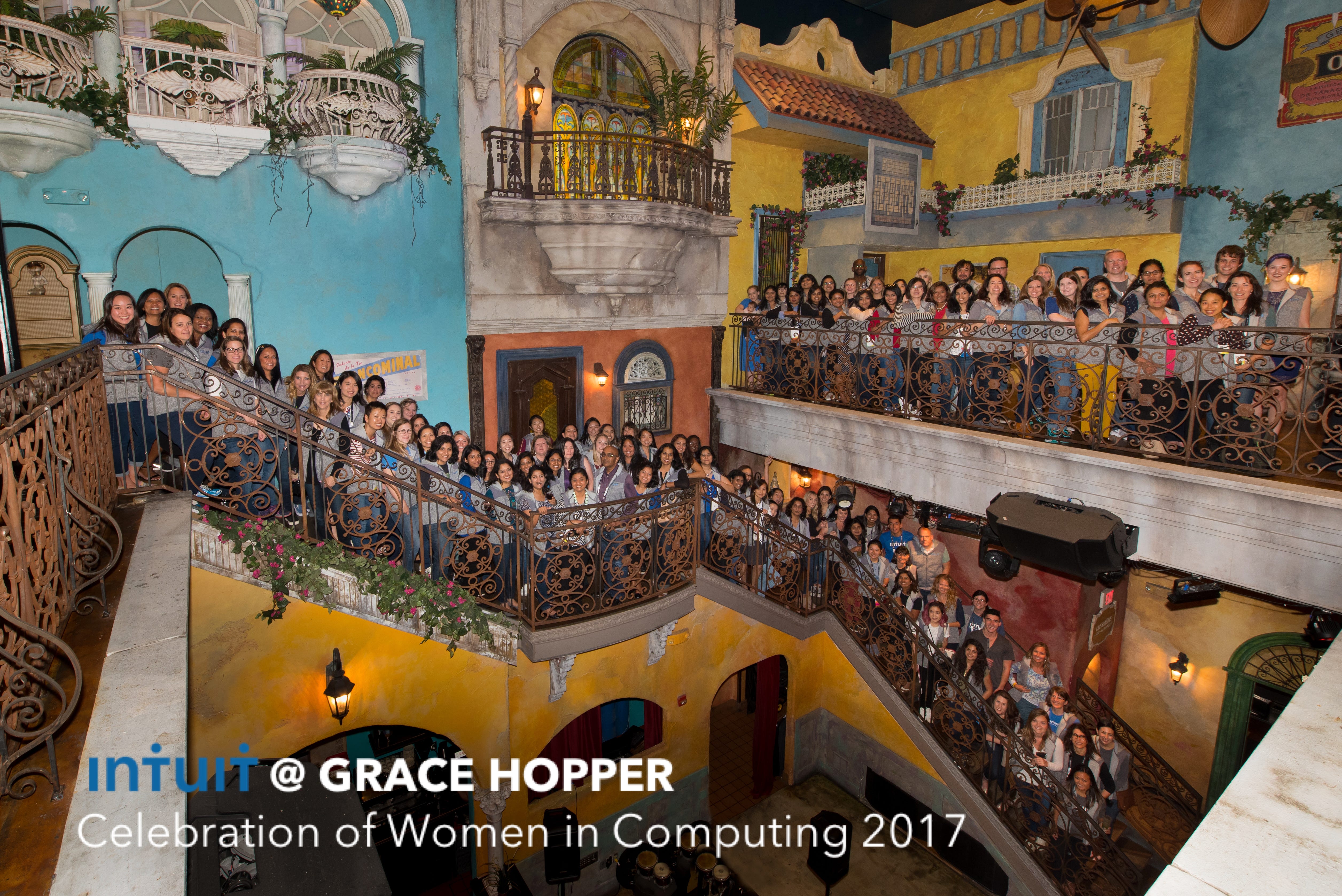
What we stand to lose
Many organizations have already rethought their investments in women in tech. GHC’s cancellation is one visible result, and it isn’t the first. In 2024, Women Who Code and Girls in Tech closed within a few months of each other, citing funding issues. Women Who Code alone had built a community of more than 360,000 technologists in 145 countries.
I won’t speculate about the reasons. Budgets have tightened, priorities have shifted, and many organizations are under real pressure. But it’s worth considering what those investments were actually buying.
When I led our company’s GHC strategy, we weren’t simply showing up with a booth and sending our employees to a conference. We invested in three overarching outcomes, and we measured our progress on each:
Brand: Our reputation as a technology leader and employer of choice. This included not just our booth and associated marketing, but also an investment in developing our employees as featured speakers sharing the innovative work they were doing.
Talent: Specific recruiting goals, connected to the roles and levels the business needed. We tracked our progress through the hiring pipeline and connected GHC impact.
People: Attending GHC was a form of recognition. Senior leaders nominated technologists using clear criteria, and being selected was a visible investment in their growth. We intentionally created opportunities to connect across the company, engage with senior leaders, and share their learnings with colleagues after the conference.
Those measures mattered. But some of the most meaningful outcomes were harder to quantify: a leader seeing the pipeline differently, an employee feeling recognized and valued, a connection that opened up a career opportunity.
The gaps in opportunity still exist. According to WomenTech Network, for every 100 men promoted to manager, only 87 women are. Women comprise less than a third of the AI workforce today. And a BCG research report show that one reason early career women are adopting generative AI more slowly than their mail counterparts is that they have less access to the networks where AI strategy is discussed.
Networks. That’s exactly what spaces like GHC provided.
To be clear, GHC was never the only way to support women in tech. And sponsoring it was never the sole measure of commitment. The true measure is if the outcomes of that investment is still being delivered.
For leaders, look at what’s left in its place
If your organization has already pulled back, look at what those investments delivered and ask the following:
Which of the outcomes are you still seeing? Where are you building your reputation with women in tech, meeting women candidates, and recognizing and developing the women on your teams?
Who owns the responsibility for those outcomes? What are the resources supporting it?
How would you know if they stalled or stopped? Would the women impacted tell you?
If the outcomes continue, but in a different path or form, then that’s a strategy shift. If the outcomes quietly disappear, it’s a retreat.
This creates an interesting opportunity. When many organizations stop investing, the ones that continue delivering these outcomes stand out, especially to the candidates that everyone says are hard to find.
For the women who had planned to be a at GHC this year, or who have watched these communities and opportunities fade, it hits hard.
I hope new events, communities, connections, and opportunities will emerge. And I know women in tech will keep finding ways to support one another.
But individual resilience and community building can’t replace organizational investment.
We need both.
The question now is whether organizations will keep creating the opportunities that help women enter, grow, and lead in technology, even if how they deliver them evolves.
What I’m listening for now
I don’t know what comes next. Could it be a reimagined GHC? Or something entirely new? Or maybe many smaller communities and experiences in its place.
But I do know that the answer should come from listening to women in tech.
That’s why I launched The Voice of Women in Tech, a listening project to better understand the experiences, opportunities, and challenges women in tech are navigating today.
In The People Behind the Data, I wrote that statistics only tell part of the story. GHC’s cancellation reinforces that point. There are headlines, funding explanations, and plenty of speculation about the future of women in tech. Behind all of it are real people whose plans, connections, and opportunities just changed.
We can measure sponsorship dollars, registration numbers, representation, and promotion rates. All of those matter. But we also need to understand what women are experiencing, what support is making a difference, and what they need to from their organizations and communities now.
I’d love to hear your perspective. What has GHC, or a community or event like it, made possible for you? And what kinds of support do you believe matter most today?
If you’d like to be part of the project, schedule a conversation. Or, if you’d like to learn what I’m hearing, sign up to receive the report.
An event can be cancelled. The need it served cannot.
The real question is whether our investment follows the need, or disappears with the event.