

We all operate with hidden assumptions.
We assume people want to be communicated with the way we want to be communicated with. We assume what motivates us motivates everyone. We assume our natural approach to work, to decisions, to conflict… is just the norm.
It’s not. And that assumption creates friction, miscommunication, and unnecessary conflict. Costing organizations time, energy, and results.
I learned this while facilitating a leadership training when I caught myself making that classic mistake.
One participant dominated every discussion. She was smart, passionate, full of opinions. And in my effort to be inclusive, I let her steer while quieter voices faded.
Midway through, I saw it on people’s faces. They were disengaging.
So I adjusted. When she jumped in again, I said warmly but firmly: “I appreciate your perspective. Let’s hold that thought and hear from others who haven’t shared yet.”
The conversation opened up. Other voices emerged. The energy in the room completely shifted.
Here’s what I realized: I had defaulted to my natural style. Open, accommodating. But effective leadership required me to stretch. Being truly collaborative sometimes means setting boundaries so all voices can be heard, not just the loudest one.
That moment of self-awareness changed how I lead. And it’s exactly the kind of breakthrough that happens when teams understand their communication styles.
Understanding Your Default Mode
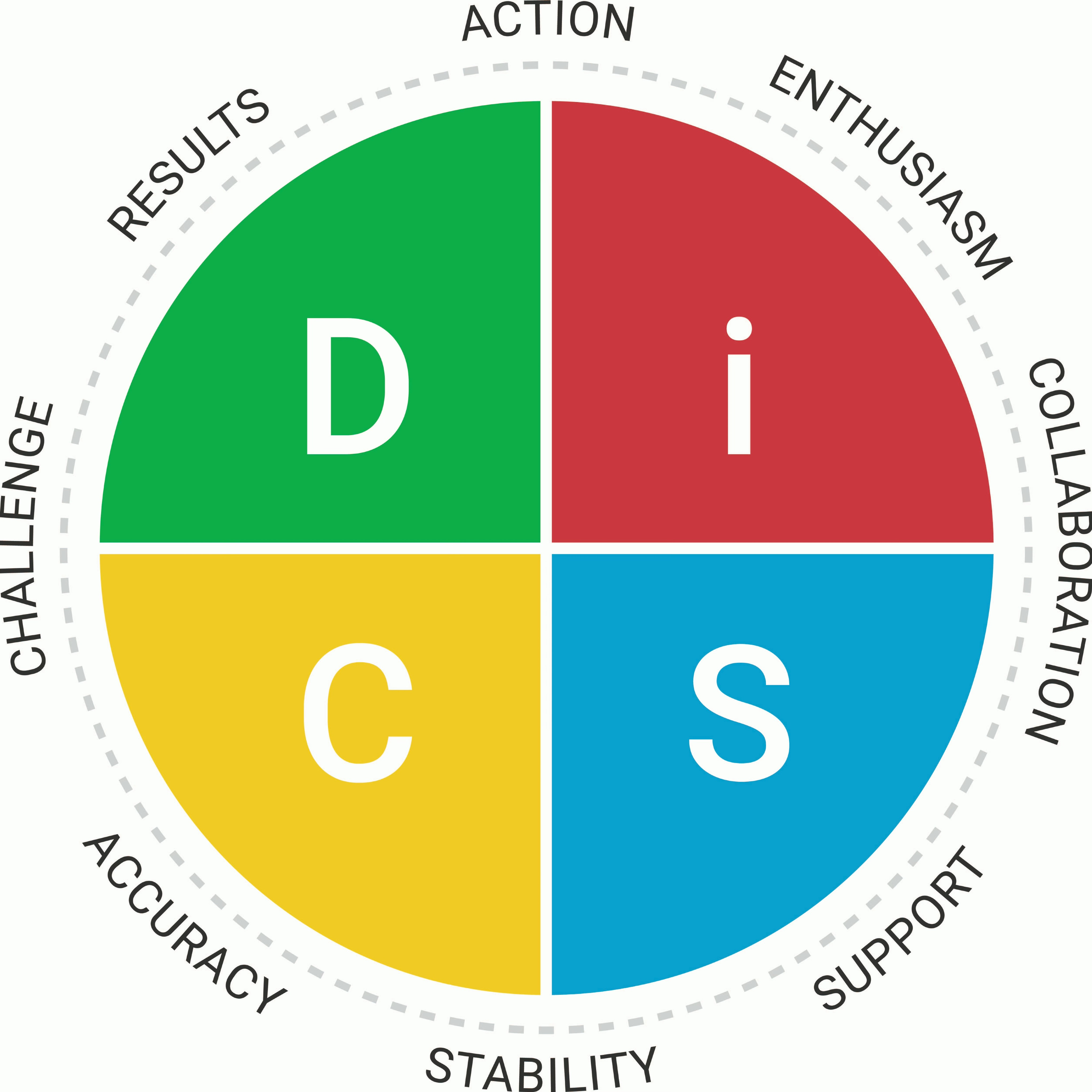
When I took the DiSC assessment, I learned I have an Si style, which is highly collaborative, supportive, relationship-focused. I value harmony and want everyone included. I’m optimistic and encouraging, always looking for the positive path forward.
I’ve been a tech executive. I can be decisive, direct, move quickly when needed. But those aren’t my natural tendencies. They’re muscles I’ve consciously developed.
Understanding my style showed me where I default under pressure and where I need to intentionally stretch. Like that moment in the training: my instinct was to avoid confrontation to preserve harmony. But the situation required me to set a boundary.
Here’s the power of this framework: it doesn’t just tell you who you are, it shows you where your natural tendencies might be holding you back. And more importantly, it shows your team where they might be misinterpreting each other.
That’s why I became a DiSC Certified Practitioner. Personal awareness creates individual transformation. You lead more effectively, navigate conflict better, play to your strengths. But the exponential transformation happens when entire teams gain this shared language. That’s when communication shifts from friction to flow.
The Instructional Manual
During my DiSC certification training, we did an exercise that made everything click: “Write tips for working with you.” Our group playfully dubbed it “Our Instructional Manual”. And the name stuck because that’s exactly what it is.
The premise was simple but powerful. Imagine you came with a set of instructions: tips for colleagues, direct reports, leaders on how to work with you effectively. What would you want them to know?
Here’s what I wrote:
Tips for Working with Tracy:
I value collaboration and want to hear your ideas. I genuinely want to understand your perspective before making decisions. If I seem to be moving forward without input, please speak up. I want this to be a conversation.
I’m naturally supportive, and I’m working on being more assertive. If I’m accommodating too quickly or you sense I’m holding back my real opinion, call it out. Ask me: “What do you really think?” or “Is there something you’re not saying?”
I need environments where intentions are clear and positive. I thrive when I know people care about each other and are coming from a good place. Coldness or purely transactional interactions drain my energy.
I bring optimism to problem-solving. I look for positive solutions and believe we can find a way forward. But I’m also working on acknowledging problems more directly rather than glossing over them.
I process collaboratively. I think best when talking things through with others. Brainstorming together energizes me. You don’t need everything figured out before we talk.
Making an impact matters deeply to me. I want our work to be meaningful and drive real results. Help me see the bigger picture impact of what we’re doing and why it matters.
When the situation demands it, I can shift gears. I’ve learned to be decisive under pressure, to make tough calls, to move fast when speed matters. Don’t mistake my collaborative nature for indecisiveness, I know when it’s time to stop gathering input and make the call.
Writing this felt vulnerable. I was naming my edges, my potential blind spots, the ways I might be hard to work with.
But when everyone in the training shared their manuals, something remarkable: we realized how incredibly different we all were. And by sharing vulnerably, how powerful it was.
One person needed time alone to think before discussing decisions. Another needed to talk it through to figure out what they thought. One person saw conflict as energizing and necessary. Another avoided it at all costs and needed reassurance that disagreement didn’t mean disapproval.
None of us were wrong. We were just different.
And by making those differences explicit, by giving each other our “instructions”, we eliminated so much guesswork.
Why Teams Need This
Here’s what I see constantly in organizations: chronic tension that exists not because people disagree on strategy, but because they fundamentally misunderstand each other’s communication styles.
The person who wants to “just decide and move” thinks their colleague is overthinking everything. The person who wants to “analyze options carefully” thinks their colleague is reckless. The collaborative leader is seen as indecisive. The decisive leader is seen as a steamroller.
The gap between intention and impact is often just a difference in style. And without a framework to name and understand those differences, teams waste enormous energy on interpersonal friction instead of results.
When teams do DiSC together, several things shift:
Miscommunication decreases dramatically. When you understand that your colleague’s directness isn’t rudeness, and their need for time isn’t indecision, you stop taking things personally. The team stops wasting energy on interpersonal friction.
Collaboration improves. When you know who needs to talk it through and who needs to think alone, who thrives on challenge and who needs reassurance, you can structure work to leverage everyone’s strengths instead of forcing everyone into one approach.
Decisions happen faster. Instead of endless back-and-forth, teams learn to design decision-making processes that honor different styles: send materials in advance for those who need processing time, build in discussion for those who think out loud, then set a clear decision point.
Conflict becomes productive. Instead of “Why is Emily being so difficult?” it becomes “Emily has a C style. She needs data and time to process. Let me adjust how I’m presenting this.” The conflict shifts from personal to practical.
Trust builds faster. When leaders share their instructional manuals: “Here’s how I operate, here are my blind spots”, it creates genuine trust, the kind where people feel safe being themselves. The team stops guessing and starts collaborating.
I work with people who have D styles: decisive, direct, action-oriented. For a long time, their certainty intimidated me. But understanding their style helped me see: they appreciate challenge. Their directness isn’t personal. And when I stay quiet to avoid conflict, I’m not serving the work.
Now I have strategies. I speak up in the moment. I avoid giving in just to restore harmony. My voice gets heard as an equal contributor.
That’s the shift DiSC creates. Not just for me, but for entire teams.
The Transformation in Action
I’ve watched teams transform when they do this work together.
The chronic tension between the project manager who wants to “move fast and iterate” and the engineer who wants to “plan thoroughly before building”? Suddenly it makes sense. She’s bringing action and possibility. He’s bringing quality and risk management. They’re not being difficult, they’re bringing complementary strengths.
Once they understand that, they figure out how to work together: front-load planning time, then create autonomy to move quickly within those guardrails.
The leader who thought their team wasn’t engaged? They realized they were coming in with decisions already made when their team needed space to process. One adjustment changed everything: sharing context in advance, opening with “I want your input before deciding”.
The team where one person’s “feedback” always landed as criticism? DiSC showed them their intention was getting lost in their delivery. They learned to lead with what’s working, then share concerns. The team stopped shutting down.
Everyone stops taking things personally and starts working more effectively.
Work With Me
Self-awareness is the foundation of effective leadership. And understanding not just your own style, but how to work with people who are wired differently than you, that’s where real team transformation happens.
I recently became DiSC Certified because I’ve experienced firsthand how powerful this framework is. It’s helped me understand why I default to seeking harmony, why I struggle to be firm in the moment, and what strategies help me show up more effectively, especially with people whose styles challenge mine.
And I’ve seen it transform teams. When everyone understands their own tendencies and each other’s, chronic tensions dissolve. People stop taking things personally. Work gets faster, better, and more collaborative.
I’m currently booking Q1 2026 DiSC engagements for teams that want to:
Reduce miscommunication and interpersonal friction
Make faster, better decisions together
Build genuine trust and collaboration across the team
Start the year with clarity and momentum
Two ways to work together:
For Individual Leaders: DiSC assessment + personalized debrief session to help you leverage your strengths, navigate your blind spots, and lead more effectively, especially in situations when you need to stretch beyond your natural style.
For Teams: Half-day or full-day DiSC workshops where your team learns their styles, creates their “instructional manuals,” and builds practical communication strategies. Includes team mapping, real scenarios, and action planning for immediate implementation.
All my coaching engagements include DiSC assessments. It’s a cornerstone of how I help leaders understand themselves and their impact.
Limited availability for January-March 2026. Schedule a free consultation to explore what would work best for you or your team.
Understanding how you work, and how your team works, changes everything.
Next week, we’ll talk about finding daily delights in the journey, especially when the journey feels overwhelming. Until then, keep carving your path.