

I was standing at the bottom of the mountain, waving goodbye to my family. Again.
“Have fun!” I called out, watching my three kids and my husband disappear toward the ski lift that would take them to the black diamond runs. The challenging terrain. The steep moguls. The trails I used to love.
And there I was. Heading to the lodge for hot chocolate.
I told myself it was fine. I was being smart. Careful. After all, I hadn’t fallen in years. I was enjoying the familiar blue runs, the predictable slopes I knew I could handle. I wore my conservative approach like a badge of honor.
But the truth? I wasn’t being smart. I was stuck playing it safe.
When Your Comfort Zone is an Anchor
Last week, I wrote about how confidence comes after you take the leap, not before. This week, I want to talk about what happens when you don’t take the leap at all. When you choose the comfort of staying put over the risk of growth.
Because here’s what I didn’t want to admit: my “playing it safe” strategy wasn’t just happening on the ski slopes.
I’d always loved skiing. When I was younger, I lived for the thrill of carving down mountains, taking in those breathtaking alpine vistas. But then life happened. Kids arrived, skiing took a backseat, and when we finally returned to the slopes as a family, everything looked different.
At first, it made sense. Our ski days revolved around teaching techniques, watching little ones pizza-wedge down bunny slopes, taking frequent hot chocolate breaks. I was the mom. The teacher. The patient one.
But something happened as my children grew. While their abilities soared, tackling black diamonds, racing through moguls, pushing their limits, I stayed exactly where I was. Anchored to my comfort zone.

I became the family’s limiting factor. The one they had to plan around. And I’d smile and wave them off, assuring them I was perfectly happy with my familiar runs.
The thing is, I wasn’t happy. I was just scared.
The Wake-Up Call
What I didn’t realize was that my pride in “playing it safe” masked a deeper truth: I had stopped growing.
The uncertainty of harder runs triggered an automatic “no” in my mind. Challenging conditions? No thanks. Black diamond? Absolutely not. I had a whole arsenal of reasons why staying on the easy runs made sense.
But worse than the runs I wasn’t taking? The moments I was missing.
I was watching my family disappear down exciting trails while I stayed behind in my bubble of predictability. I was choosing the illusion of safety over the reality of connection. Over joy. Over growth.
And one day, standing at the bottom of that mountain watching them go without me, something cracked open.
What was I so afraid of? Falling? Looking foolish?
The real risk wasn’t the harder run. It was spending another season watching life happen from the lodge.
Taking the Leap
Last season, something shifted.
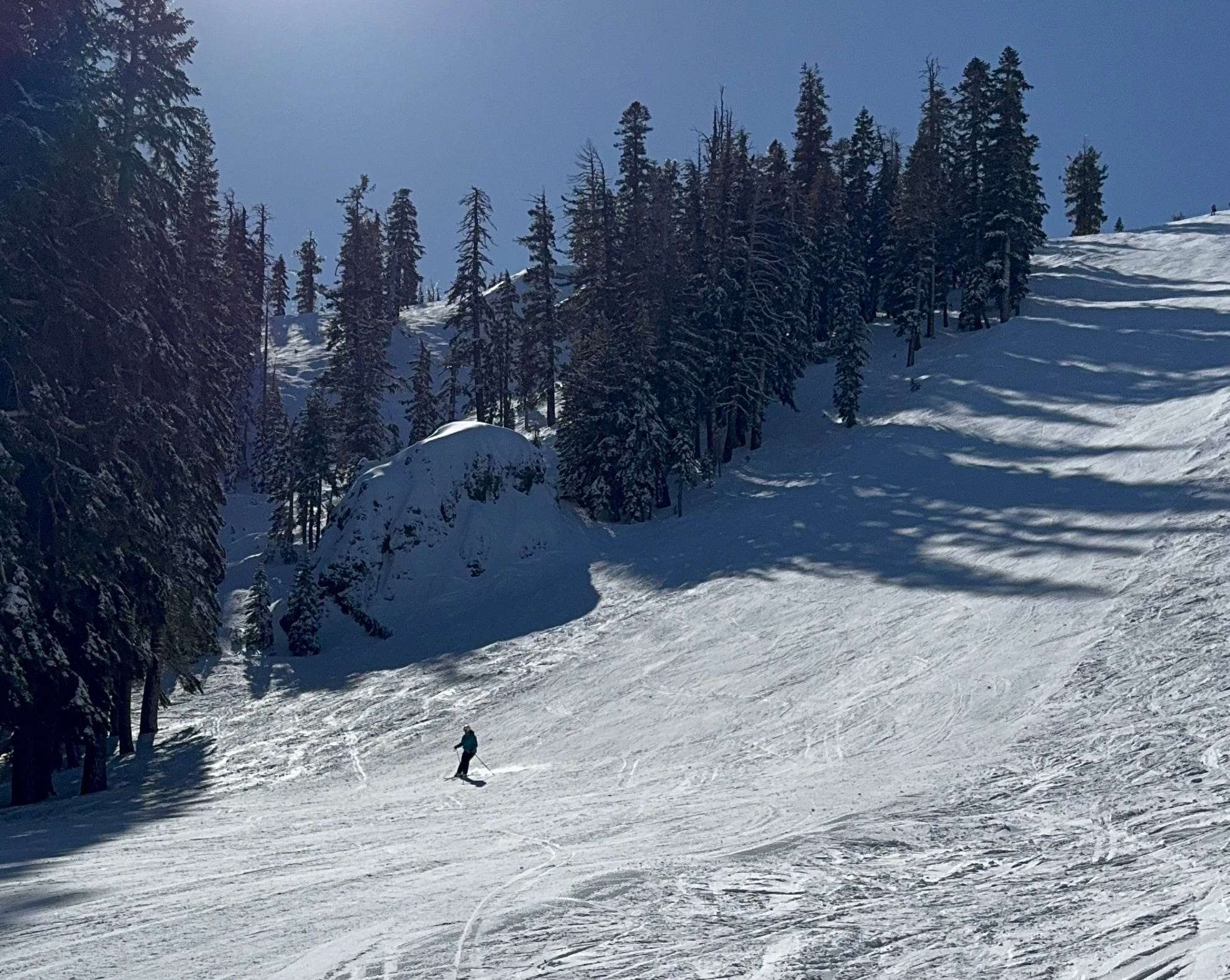
I made a decision. A conscious choice to challenge what I’d accepted as my limits. And I found myself at the top of a black diamond run, heart pounding, telling myself, “You can do this.”
Did I struggle? Absolutely.
Did I fall? Multiple times.
Did doubt creep in with every turn? Yes.
But here’s what else happened: I got up. Every single time.
I completed runs I never thought possible. And most surprisingly? I enjoyed it. When I trusted in my capabilities and believed in my ability to recover from falls, the skiing came more naturally. The revelation hit me like a blast of mountain air: most of my limitations existed solely in my mind.
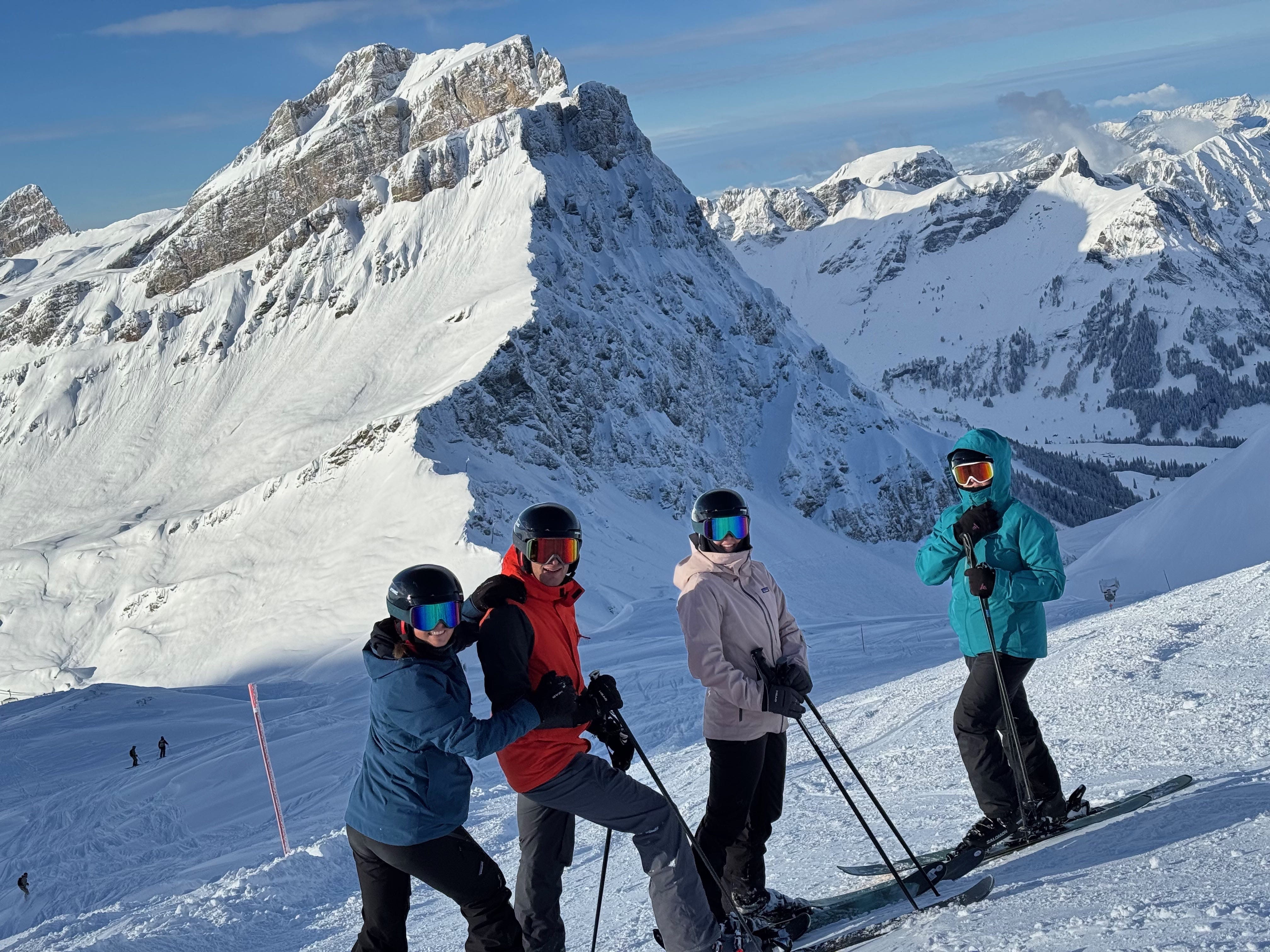
Yes, there’s physical conditioning involved in becoming a better skier. But just like strengthening muscles through exercise, we can strengthen our courage through practice. Each small victory builds on the last, creating a foundation of confidence.
Each run taught me the same lesson: I hadn’t lacked the ability. I was just too afraid to try.
The Pattern I Couldn’t Ignore
Here’s the thing I didn’t want to admit: this wasn’t just about skiing.
This pattern of playing it safe had shown up throughout my career.
How many times had I stayed silent in key meetings instead of offering my perspective? How often had I avoided reaching out to that executive, telling myself they were too busy? How many times had I watched from the sidelines as others volunteered to lead major initiatives?
I’d told myself I was being strategic. Waiting for the right moment.
But I wasn’t waiting. I was just afraid of failing publicly.
The question haunted me: Was I avoiding these opportunities because I couldn’t do them? Or because I was afraid to try?
I knew the answer.
Building the Courage Muscle
Taking professional risks is like building any other muscle. At first, it feels unnatural and uncomfortable. You look at colleagues who seem to navigate challenges effortlessly and wonder what they have that you don’t.
But making the deliberate choice to push beyond your comfort zone yields unexpected rewards.
Start small. Build gradually. Will you succeed every time? No. Will you fall? Definitely. But will you succeed more often than you expect? Absolutely.
And each time you do, you’ll realize: the barrier wasn’t the challenge itself. It was the story you were telling yourself about why you couldn’t do it.
What I See Now
As a leadership coach, I see this pattern everywhere. In every industry, at every level.
The talented director who hesitates to apply for the VP role, believing she needs “just one more year” of experience. The technical lead who continues managing small projects, despite having innovative ideas for company-wide initiatives. The executive who won’t speak up in board meetings because they’re the newest member.
These professionals aren’t held back by lack of capability. They’re held back by self-imposed limitations. By the voice that says, “Stay here. It’s safer here. You might fail if you try.”
But here’s what I know now, both from my own experience and from coaching others: growth rarely feels comfortable in the moment. Our capacity for handling uncertainty and challenge almost always exceeds what we think we can handle.
Ginni Rometty, former CEO of IBM, said it perfectly: “Growth and comfort do not coexist.” It’s a line I return to again and again. Because it’s true. Every time you choose comfort, you’re choosing to stay exactly where you are.
The only real obstacle standing between you and growth is the barrier you’ve built in your mind.
Your Challenging Run
So here’s what I want you to ask yourself:
What’s your equivalent of that black diamond run you’ve been avoiding?
Maybe it’s the promotion you haven’t applied for. The project you haven’t volunteered to lead. The tough conversation you haven’t initiated. The business you haven’t started. The pivot you haven’t made.
What story are you telling yourself about why you can’t tackle it?
Is that story true? Or is it just the voice of fear, dressed up as wisdom?
What’s the smallest step you could take today toward that challenge?
Playing it safe has a cost. And that cost is growth. Connection. Joy. The person you could become if you just pointed your skis downhill and trusted yourself to handle whatever comes.
The Real Risk
Last week, I talked about how you don’t need confidence before you take the leap. It comes after. This week, I’m telling you something equally uncomfortable:
Playing it safe is actually the riskiest move of all.
Because years from now, you won’t regret the times you fell. You’ll regret the runs you didn’t take. The opportunities you dismissed. The growth you chose to avoid.
The mountains will always be there. The question is: will you be standing at the bottom, or will you be on them?
Take the lift. Get to the top. Point your skis downhill.
You might fall. But you’ll get up. And when you do, you’ll realize you were always capable of more than you thought.
I’m Tracy Stone, a leadership coach who helps professionals identify and break through their self-imposed limitations. If you’re ready to stop playing it safe and start taking on your challenging runs, reach out.
Next week, we’ll talk about what happens after you take the risk—how to shift from playing defense to playing offense in your career. Until then, keep carving your path.
Love this!!