


Last week I wrote about permission to experiment: about how you don’t need a plan, you need a small experiment. This week is the other half of that idea. Because if experimentation is the how, this is the why: so many of us keep reaching for a plan in the first place, when what the moment actually calls for is judgment.
Years ago after my first maternity leave, as I was getting ready to go back to work, I was determined to crack the code of being a working mother. I approached it the same way I’d approached my engineering classes: define the variables, gather the data, optimize the solution.
And naturally, I built a spreadsheet. It was a thing of beauty.
Provider-to-child ratios. Hours. Cost. Food. Curriculum. Distance from home. Extra services. I color-coded it. Of course I did.
I visited daycare after daycare, filled in the cells, added new columns when I learned of something I’d missed, and convinced myself that if I just collected enough information, the answer would become obvious. That certainty was out there somewhere, waiting for me to gather enough data to find it.
But when it came time to decide, the spreadsheet didn’t make the decision.
A gut feeling did.
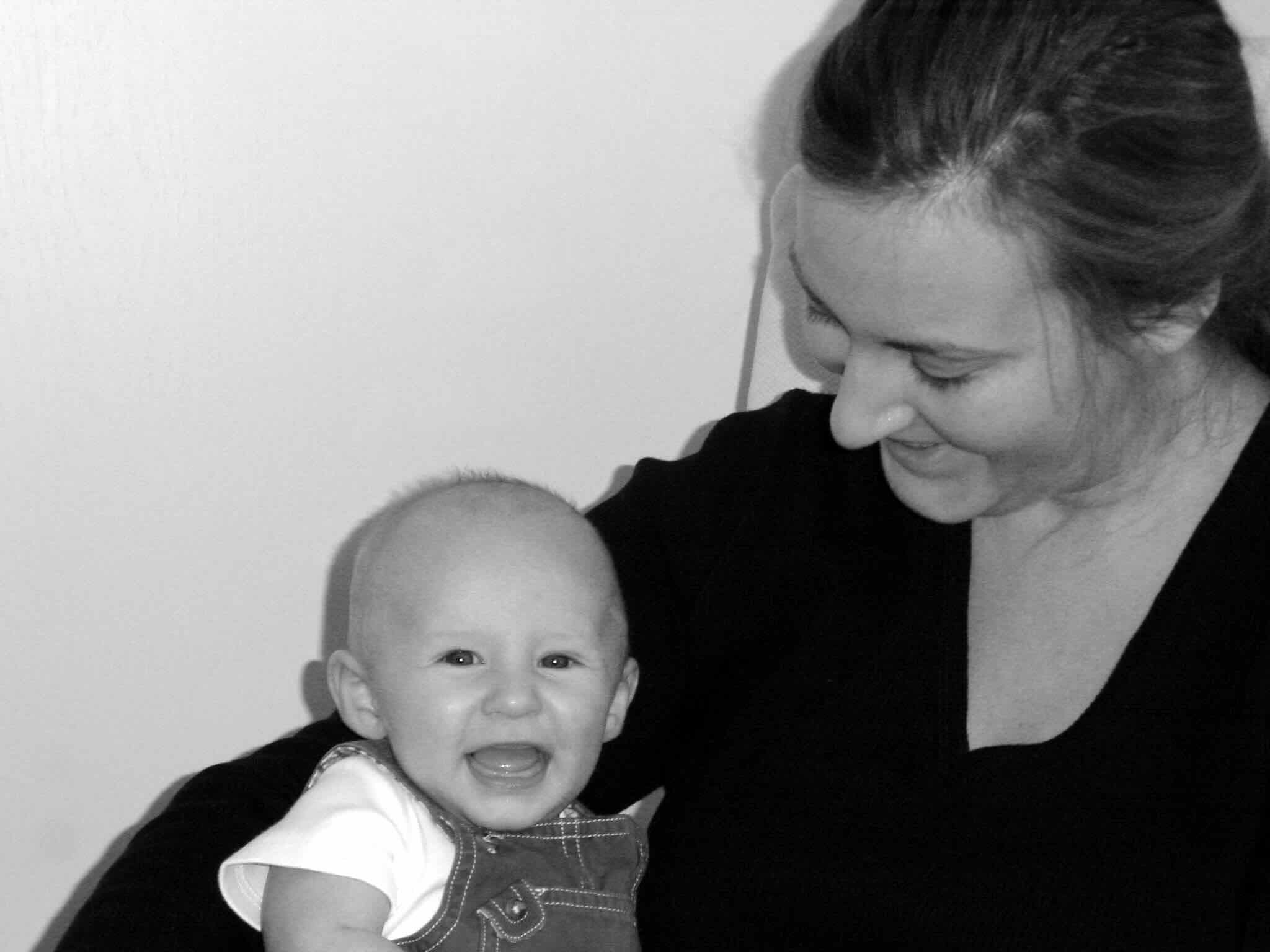
It was the way she held my son. The warmth I felt walking through the room. The nurturing and care they poured into each child. The sense that they weren’t just caregivers. They genuinely loved the kids. None of that lived in a spreadsheet cell. All that data, and the thing that actually decided it wasn’t my spreadsheet at all.
Technologists love formulas
It took me years to realize the spreadsheet wasn’t the problem. It was the assumption underneath it: that if I gathered enough information and looked at it from every angle, there would be a right answer. I don’t think this is a personal quirk. I think it’s how a lot of us are built, especially those of us who work in tech.
We’re trained to solve problems: customer problems, efficiency problems, system problems. We’re taught that if you gather enough information, the right answer reveals itself. We trust logic. We trust repeatability. If you can isolate the variable and run the test again, you should get the same result.
And here’s the thing: those instincts aren’t wrong. They’re exactly what made us good at our jobs. They’re what got us promoted the first few times. So it makes sense that when we grow into higher leadership roles with much messier, more human problems, we bring the same toolkit with us. We ask: What are the exact steps? What’s the playbook? What’s the formula for influence? What should I do, specifically, to get promoted?
We want leadership and career growth to work the way debugging a system works. Find the broken piece, fix it, watch the whole thing run cleanly.
The rubric, and the illusion of a formula
I remember studying our promotion rubrics like they were an answer key. I decoded every bullet. I mapped my accomplishments to every competency. I built my own internal spreadsheet of have I demonstrated this, yes or no. I fully expected that if I checked every box, the promotion would follow.
Sometimes it did. Sometimes it didn’t. And when it didn’t, I assumed I missed something in the formula. I’d done the analysis. I’d followed the rubric.
I see this same pattern constantly now, in almost every client I coach through a promotion cycle. They bring me the rubric. They’ve highlighted it, annotated it, sometimes rewritten their entire self-assessment to mirror its language line by line. And it’s not that this work is wasted — it isn’t. But I watch smart, capable people treat the rubric like it’s the whole test, when it’s really just the visible part of the test.
Because underneath the rubric, other things are quietly deciding the outcome: trust. Influence. Timing. Relationships. What the organization needs right now. Whether the people in the room advocating for you actually believe in you, or just believe you’re competent. None of that shows up in a bullet point. None of it is something you can fully control, no matter how well you’ve decoded the document.
That’s usually the moment a client and I stop working the rubric and start working the relationships, the visibility, the timing. The parts that were never going to show up on the page.
Leadership is an art, not a science
Here’s the distinction I’ve landed on, and it’s one I wish someone had handed me years ago.
Science is repeatable. Predictable. If X, then Y. Reliably, across contexts, run it again and get the same result. Science rewards finding the right inputs.
Art is contextual. Relational. It changes depending on the room, the person, the moment. What worked in one moment can fall flat in the next. Art rewards judgment. Knowing when the “right” move is the one that doesn’t look right on paper.
Leadership isn’t an exact science. It’s more like writing. There are fundamentals underneath it. Grammar matters. Structure matters. There are techniques that make writing stronger and clearer.
But no formula can tell you exactly which story to tell, which words will resonate, or where to place the pause that changes the meaning of an entire sentence.
Two people can follow the same rules and create completely different pieces of writing. That’s not a flaw. That’s the art.
Leadership works the same way. The fundamentals matter. But the real work happens in the judgment, nuance, and choices that can’t be reduced to a checklist.
That’s the thing about leadership and many of the big decisions in our lives: they’re mostly art and nuance, dressed up as science.
The uncomfortable truth. And why it matters.
The things that matter most in our careers often can’t be fully spreadsheeted. You can gather data. You should gather data. But eventually you have to use judgment, trust your intuition, and make a decision with information that will never be complete.
Here’s the cost of not accepting that: I’ve watched people (myself included!) delay decisions for months waiting for certainty that was never going to arrive. I’ve watched talented leaders burn out trying to perfect a rubric instead of building the relationships that would have actually moved them forward. I’ve watched people conclude, “I must not be cut out for this,” and assume the formula worked for everyone else and failed only for them. When really, they were just using the wrong tool. You can’t debug your way into becoming a trusted leader. At some point, the spreadsheet has to be put down.
Beyond the spreadsheet
Maybe that’s why so many of us struggle with career transitions and leadership growth. We keep searching for a formula when we’re actually being asked to learn an art.
And maybe that’s why experimentation matters so much.
When there isn’t a formula, experimentation becomes how we learn. We try, we learn, we adjust, and over time we develop the judgment that no spreadsheet could ever give us.
Art requires practice. Art is subjective. It’s not clean or clear-cut. It requires experimentation, and trying things that might not work, and trusting yourself before you have certainty. It requires accepting “good enough” over perfect, which is exactly what I want to dig into next week.
The spreadsheet can inform the decision. It just can’t make it for you. At some point, you have to trust yourself enough to choose.
Data can narrow and refine the possibilities. Judgment ultimately chooses among them.
Some of the most important choices in our lives happen outside the spreadsheet entirely.
What’s something in your career or life that you tried to spreadsheet? And what actually ended up making the decision instead?