

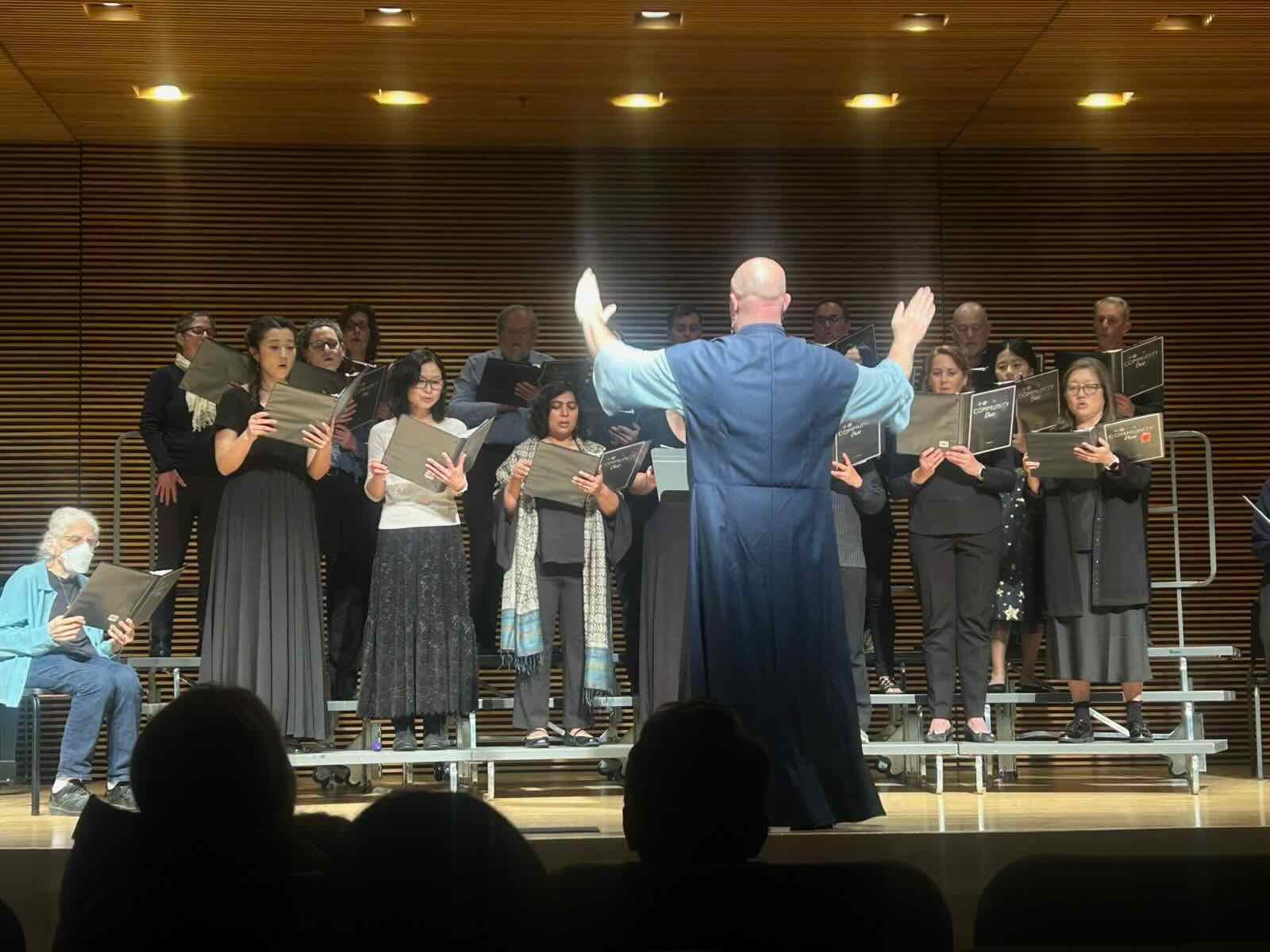
There I was, walking into the room for the first rehearsal of a community choir—completely nervous and unsure of what I had signed up for. What started as a slightly crazy idea to find something new and energizing as I stare down this empty-nester chapter of life had suddenly become very real. The evenings that used to be filled with kids’ activities and logistics were quieter now, and I found myself asking: What do I want to do with this next season?
Still, as I stood there, I couldn’t help but wonder: What am I doing? Who do I think I am?
I hadn’t sung in a choir since high school. Sure, I love music and I sing along to the radio in the car—but an organized choir? Learning music? Performing? All three of my kids chose sports over music, so I’d grown far more comfortable on the sidelines of soccer fields and cross-country meets than in concert halls. Somewhere along the way, I had become an excellent spectator. (A sports spectator, to be clear.)
And now here I was, standing in a room full of strangers, wondering who would be there, what we would sing, and whether I would be able to hang.
I realized how comfortable I’d become cheering from the sidelines. And how rusty I was at stepping into something new myself.
What does it take to add your voice when you’re not even sure it belongs?
Learning My Part
The repertoire our director handed out that first night was... ambitious. We’d be learning songs in different languages. Several pieces were a cappella, meaning no instrumental safety net. We’d be singing in four-part harmonies, sometimes six parts. With a choir of only about 25 people, there was nowhere to hide. Each voice truly mattered. You couldn’t just blend in and hope for the best. You had to learn your part.
What surprised me most was the work outside of rehearsal. I found myself practicing at home, replaying tracks, breaking down complicated sections, repeating unfamiliar words and pronunciations. I didn’t anticipate this, but found it satisfying. It was exhilarating to be stretched and challenged in a completely new way—not in my professional domain, not in parenting, but in something entirely different.
There’s a particular vulnerability in being a beginner again. Those early rehearsals were humbling. How were we going to pull this off? Had we taken on more than we could handle? But gradually, week by week, something shifted. Anxiety gave way to growth. Uncertainty turned into capability. I was learning my part. Not just the notes and words, but what it meant to contribute my voice with confidence.
And here’s something I didn’t expect: I started hitting notes I didn’t think I could reach. With proper technique and practice, my range expanded. The metaphor wasn’t lost on me.
How often do we underestimate what we’re capable of until we actually try?
Carried and Accountable
One of the most powerful parts of the experience was the community itself. The choir was made up of people of different ages, backgrounds, and experience levels. Some were seasoned singers; others, like me, were finding our way back to music after a long break. We were welcomed exactly where we were.
Our director emphasized something that stayed with me: each of us was personally accountable for learning our part. AND the group would carry us when we faltered. If you lost a word or missed a note, the music didn’t stop. The collective sound held you until you found your way back in.
It was a beautiful paradox: held accountable, and held up, both at once.
I learned how much my part mattered. Not because it was the loudest or most impressive, but because it contributed to something bigger. When all of our voices came together, the result was something none of us could have created alone. Hearing the harmonies lock in for the first time felt almost magical.
We sounded stronger together than any one voice ever could.
Taking the Stage
Soon enough, concert day arrived, and we were lining up on stage. I hadn’t performed music in front of an audience in a long time, and standing there was both exhilarating and surreal. The role reversal was almost comical—my kids were in the audience filming ME on stage.
Friends were there too, including the couple who’d heard us share this “crazy idea” over dinner weeks earlier. They showed up to support what had started as curiosity and become commitment.
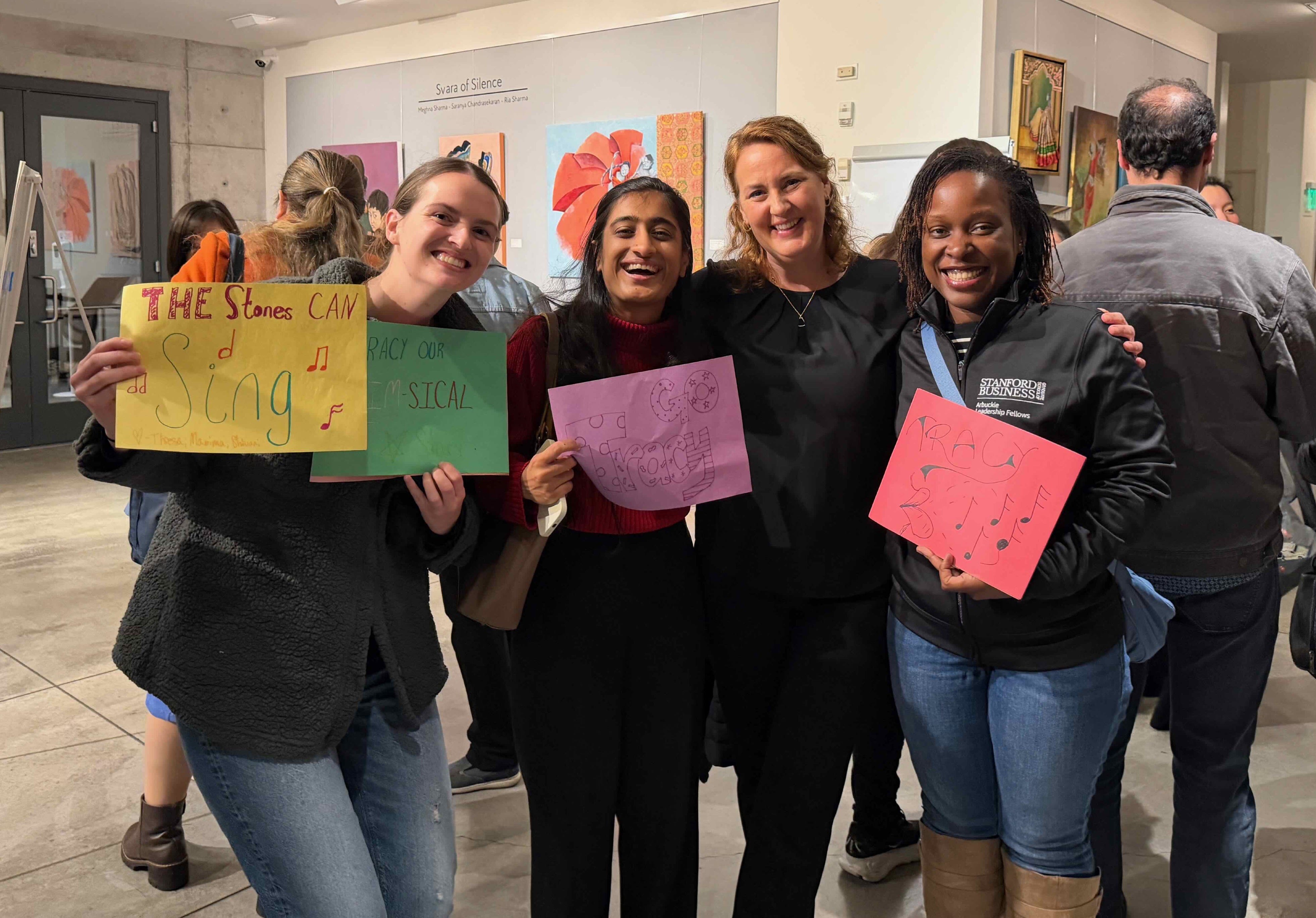
And then there was another group I hadn’t quite expected. A handful of students from the Stanford GSB Women in Management small group I facilitate had driven down from campus to be there. I had mentioned this choir experience almost in passing—one of those new, slightly scary things I was trying as I stretched myself. When they asked about the concert, I brushed it off, insisting they didn’t need to come. But they did. They showed up to support me, and their presence meant more than I can fully put into words.
As we began to sing, I felt that familiar mix of nerves and excitement. But I also felt something I hadn’t anticipated: pride. Not pride in being perfect, but pride in showing up. Pride in learning something hard. Pride in adding my voice to something beautiful.
The Leadership Lesson I Didn’t Expect
Somewhere between that first nervous rehearsal and taking the stage, I realized this wasn’t just about singing.
It was about leadership.
Adding your voice: Leadership isn’t about having all the right notes. It’s about the courage to contribute your unique part, even when you’re uncertain. Especially then.
Beginner’s mindset: The best leaders stay willing to be beginners, to learn in entirely new ways and be vulnerable in unfamiliar domains. Growth requires us to step into spaces where our usual strengths don’t carry us and curiosity has to lead.
Collective impact: One voice singing alone is just a voice. But many voices, each holding their part while supporting others? That’s harmony. That’s the power of connection through shared creation—and how teams create something none of them could achieve alone.
Belonging through contribution: I belonged in that choir not because I was perfect, but because I showed up, learned my part, and added my voice. The same is true in leadership. We earn our place not through flawlessness but through committed participation.
Leadership isn’t just about finding your voice.
It’s about adding it—alongside others—to create something bigger than yourself, even while you’re still learning the notes.
Finding Your Voice in Community
So many leaders (especially women) wait to have the “perfect” voice before speaking up. We practice in private. We hesitate. We hold back until we’re certain we won’t miss a note. We stay comfortable as spectators, watching others perform.
But leadership, like choir, doesn’t work that way.
It doesn’t happen in isolation. It happens in community.
What made my choir experience transformative wasn’t just that I learned to sing better. It was that I learned with others—people who were also stretching, also uncertain, also adding their imperfect voices to something bigger. We grew stronger together, not because we were all perfect, but because we showed up for each other.
That’s what community does. It holds space for you to try. It carries you when you falter. It reminds you that your contribution matters, even when—especially when—you’re still learning.
Where might you be trying to go it alone?
What would change if you found your people? The ones who will practice alongside you, who will hold you accountable and hold you up?
This is why I believe leadership grows fastest in community, not isolation. When we practice together, challenge ourselves alongside others, and create something bigger than ourselves. That’s when real growth happens.
So I’ll ask you what I asked myself standing outside that rehearsal room: What does it take to add your voice when you’re not sure it belongs?
Maybe the answer is simpler than we think:
It takes showing up. Not alone, but with others who are also showing up.
It takes practicing your part. While others practice theirs.
It takes trusting that you’ll be both held accountable and held up by the people around you.
That’s not just courage. That’s community.
P.S. This experience reminded me why shared spaces for growth matter so much. More on that soon.
Thank you for reading Carving Her Path! This newsletter is for leaders who are ready to lead authentically, build from their strengths, and create the impact they’re meant to have.
If this resonated with you, I’d love to hear from you. Comment below and tell me: Where are you ready to add your voice? What’s holding you back from stepping off the sidelines?
Know someone who needs this message? Share this post with a colleague or friend who’s ready to stop waiting for perfect and start showing up powerfully.
Want to work together?
If this post resonated, you might benefit from:
1:1 Coaching to help you step off the sidelines and into the leadership role you’re ready for
Team Workshops that create the kind of accountable, supportive community where everyone’s voice matters
Speaking on authentic leadership, vulnerability, and building high-trust teams
The work I do is about helping leaders find their voice—and the community that helps them use it.
Keep carving your path, Tracy