

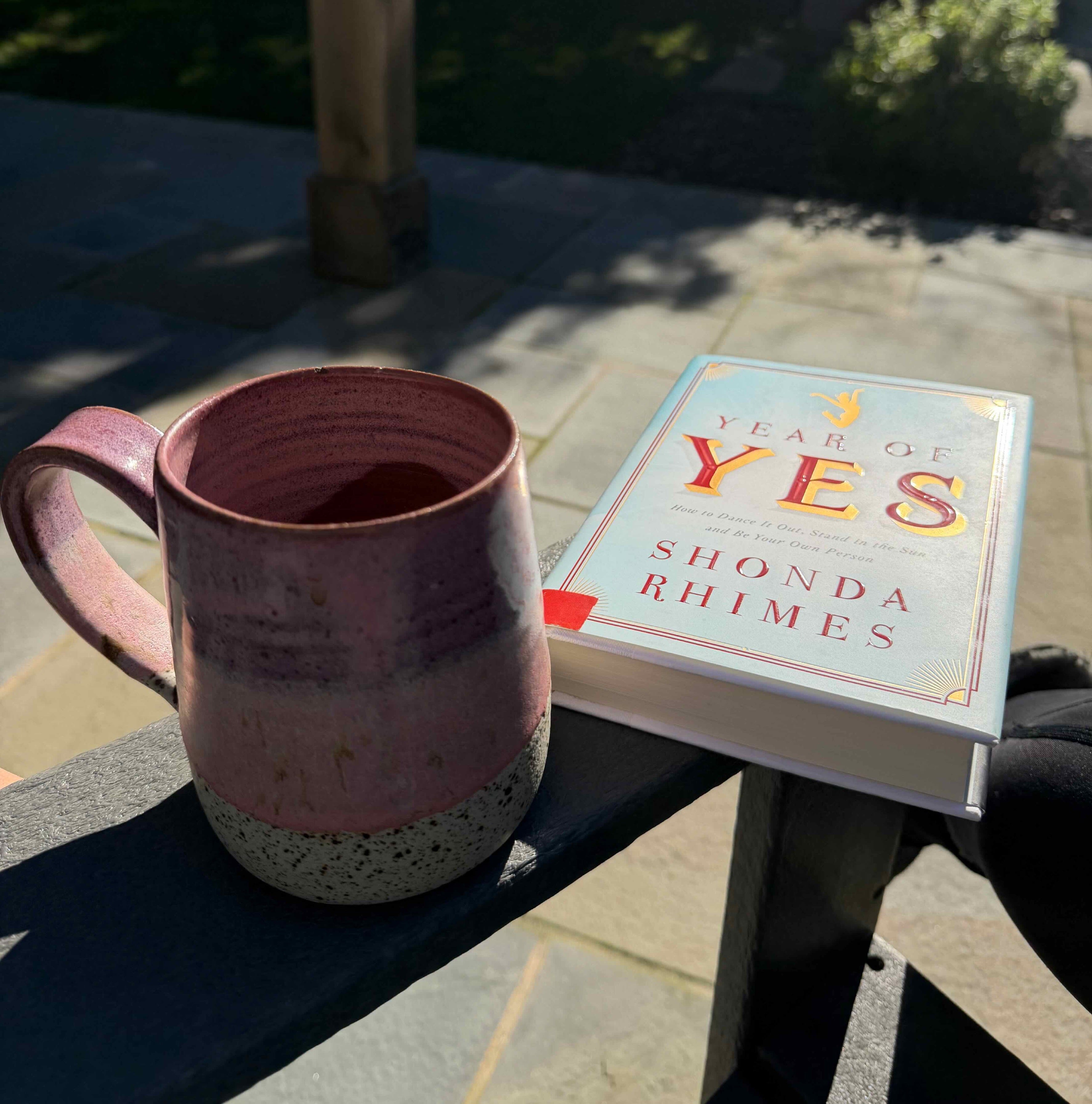
It’s mid-January, and I find myself reaching for a book I’ve read more than once. Shonda Rhimes’ Year of Yes. Not because it’s new, but because it meets me where I am, every single time.
As the glow of the holidays fades and the new year starts to feel real, moving from “Happy New Year” into routines, goals, and expectations, I notice the same question surfacing: What am I holding back from? What am I quietly not saying yes to?
That question is at the heart of Rhimes’ journey - her year of committing to saying yes and changing her life. And while her story is powerful, what stays with me isn’t the scale of her yeses, it’s the courage behind them. The willingness to stop qualifying, postponing, or explaining. To simply choose.
This year, as I cracked open the book again, I realized something: I’ve gotten better at saying yes over the years. But I’m still catching myself adding qualifiers, hedging my bets, building in escape routes. And I know I’m not alone in this.
The Qualified Yes (or Outright No)
How many times have you backed away from an enthusiastic yes when a new opportunity or experience arises? Maybe it’s not even an explicit question, but it’s something inside of you that you aren’t letting yourself dream.
This has happened to me more times than I care to admit.
One that stands out was when I said yes to co-founding a non-profit. I had never been an entrepreneur. I had spent my career in large companies with entire departments supporting the work: product development, finance, legal, HR, marketing. Suddenly, I was doing all of those things. I was writing curriculum, developing partnerships, learning grant writing, handling payroll and invoicing, teaching, hiring — and figuring it out as I went.
I didn’t say yes because I felt ready. I said yes because something in me knew it mattered, even though I had no idea how it would all work.
It would have been easier to wait. Easier to convince myself I needed a plan, more experience, more confidence. Easier to protect myself from failing. But growth rarely asks us to wait until we feel prepared.
And yet, even after that experience, I still catch myself hedging. Last fall, when I received an email asking if I’d speak to 450 first-year engineering students at Purdue (my alma mater) about interviewing with confidence, my immediate internal response was a flood of qualifiers: Yes, if I can figure out how to make this content work for such a large audience. Yes, when I have a detailed outline approved. Yes, but I’d need to figure out the logistics & time to prep.
Then I stopped myself. I knew this material. I’d coached countless people through interviews. And this was exactly the kind of opportunity I’d been hoping for - a chance to give back, reach young students starting their engineering journeys, connect with my university.
So I replied with just: Yes. I’d love to!
Developing and fine-tuning my presentation took time, at an especially busy season. Standing in front of 450 people was intimidating. But that simple yes, without qualifiers, without escape routes, forced me to trust myself in a way a qualified yes never would have.
Or take something much smaller: a few weeks ago, when my husband suggested trying a crazy new experience for our weekly “50 New Things This Year” commitment, my first instinct was “Yes, but let me check my calendar.” Why? The calendar was fine. I was just automatically hedging.
The common refrain (or excuse) you may be telling yourself could be:
“Yes, but I need to finish X first”
“Yes, if I can find the time”
“Yes, when I feel more ready”
Or the outright dismissal could be:
I don’t see how that would work.
I’ve never done that before.
I’m too busy.
This comes from fear. From uncertainty. From all the unknowns swirling in our heads. We haven’t done that before - how do I know I can? What if I fail? It’s actually much easier to not even try, to not set ourselves up for failure, embarrassment or disappointment. So we respond with a flat out no, or a qualified yes.
The Full Sentence Yes
Remember those themes that matter most to you in this season? The values and intentions you want to build from? Saying yes is how you actually live them, not just write them down.
Growth and comfort don’t coexist. And perfection is not the price of entry.
Yes can be a full sentence by itself. And it is incredibly powerful.
Think about how it feels when you ask someone something and they respond with a simple “Yes.”
Not “Yes, I think so.”
Not “Yes, probably.”
Not “Yes, but let me check with...”
Just: Yes.
There’s confidence in that. Commitment. Clarity.
Now think about the last time YOU gave someone (or yourself!) a full-sentence yes. When was it?
When you say yes as a full sentence, you are saying:
Yes to yourself (not just others)
Yes to growth (even when it’s uncomfortable)
Yes to opportunity (before you feel ready)
This clarity - knowing what you’re really saying yes to and what needs to be a no - is often the first work we do in coaching. Because you can’t say a full-sentence yes when you’re unclear about what energizes versus drains you.
What Saying Yes Requires
A full-sentence yes doesn’t require certainty. It requires:
Courage - Not the absence of fear, but the willingness to move forward alongside it. Like saying yes to that stretch project before feeling ready.
Agency - You are choosing this. For yourself. You own this yes. You are not waiting for permission or validation.
Self-acceptance - Letting go of waiting for the “perfect” version of yourself. You are ready enough right now.
Your Yes for 2026
As this year unfolds, I’ll leave you with a few questions:
What yes are you holding back on?
Where are you adding qualifiers that don’t need to be there?
What would change if you let one yes stand on its own?
I’m asking myself these questions too. The opportunities I’m hesitating on. The new service offering I keep saying “not yet” to. The creative risks that feel too vulnerable.
What’s your yes?
Last week was about naming what energizes you.
This week is about choosing it.
Yes.
Full sentence.
Full stop.
P.S. If you’re struggling to identify which yeses align with your strengths and where you should be saying no, let’s talk. This is exactly the clarity work coaching provides. Reach out to learn more.
I’m Tracy Stone, a leadership coach who helps leaders move from hesitation to action - through coaching, intentional development, and creating space to figure out what your full-sentence yes actually looks like.
Until next week, keep carving your path. One courageous yes at a time.
📌 If this resonated with you, would you share it? Forward it to someone who needs permission to say yes, share it on LinkedIn, or restack it on Substack Notes. Your shares help me reach more leaders carving their own paths.